


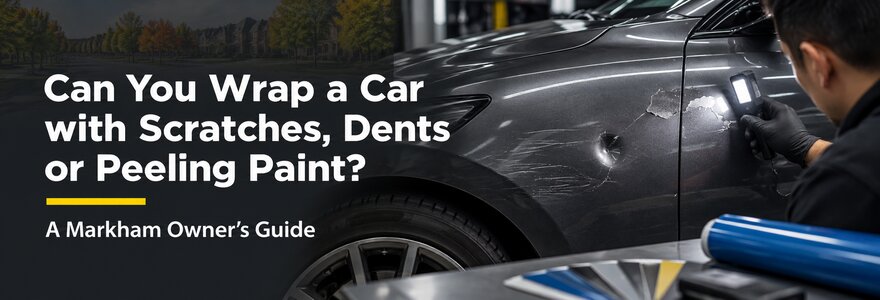
Can you wrap a car with scratches, dents or peeling paint? Sometimes—but the condition of the surface determines whether wrapping is a sensible option. Minor cosmetic marks may be manageable, while deep scratches, damaged clear coat and rust usually require attention before installation.
For Markham drivers considering a colour change, the important distinction is between changing a vehicle’s appearance and repairing its underlying finish. Vinyl follows the surface beneath it, so existing damage can affect both the finished look and the installation.
Before choosing a colour or booking a car wrap, here is how to assess your options.
Which Types of Damage Can You Wrap Over?
This table provides a starting point. An installer should inspect the actual vehicle before confirming suitability.
| Surface Condition | Can It Be Wrapped? | Recommended Next Step |
|---|---|---|
| Light surface scratches or swirl marks | Potentially, if the paint and clear coat are sound. | Have the installer assess the surface and expected appearance. |
| Deep scratches or stone chips | May remain visible and create vulnerable areas. | Assess whether repair is needed before installation. |
| Small dents with intact paint | Possible in some cases, but the dent remains. | Consider dent repair before wrapping. |
| Peeling paint or clear coat | Not a suitable foundation for a reliable wrap. | Repair the failing finish first. |
| Rust or bubbling paint | Should not simply be covered. | Arrange a body shop assessment and appropriate repair. |
| Recently repainted panels | Potentially, after proper curing and assessment. | Confirm compatibility and timing with the refinisher and installer. |
Can You Wrap a Car with Scratches?
Light Scratches and Swirl Marks
Fine cosmetic marks do not automatically rule out a wrap. If the surrounding finish is stable and smooth, an installer may consider the panel suitable after preparation.
However, covering a mark with a new colour does not guarantee that its texture will disappear. Ask which imperfections may remain noticeable with your chosen film, rather than assuming every scratch needs polishing or that vinyl will conceal everything.
Deep Scratches and Stone Chips
Deeper damage needs closer attention. Grooves, chipped edges and raised touch-up paint can affect the surface profile. Areas with damaged paint may also be more vulnerable when film is repositioned or eventually removed.
Avery Dennison discusses these concerns in its guide to a sound surface for vehicle wraps, including the risks associated with scratches, stone chips and touch-up repairs.
Before filling chips or applying touch-up paint yourself, speak with the installer. Agreeing on the preparation process first can help avoid paying for work that needs to be redone.
Can You Wrap a Car with Dents?
A wrap changes the colour and finish of a panel, but it does not straighten the panel. A door ding or crease can remain visible after installation because the film follows the vehicle’s shape.
If the paint is intact, ask a qualified repair technician whether paintless dent repair is suitable. This process can correct certain dents while preserving the existing paint. Suitability depends on the individual damage, so an assessment is necessary.
For a Markham daily driver with a few parking-lot dents, repairing the most noticeable areas before wrapping may produce a result you are happier with. Ask for separate repair and wrap estimates so you can decide where to spend your budget.
Can You Wrap Over Peeling Paint or Clear Coat?
Peeling paint or clear coat should be repaired before wrapping. Loose material cannot provide a dependable foundation for the film. Applying vinyl over it may lead to lifting, an uneven finish or additional paint separation during installation or removal.
This is particularly important if you are considering a roof or hood wrap to cover visible deterioration. Changing that panel’s colour does not resolve the failing coating underneath.
Have a body shop assess the affected area and coordinate the repair with your wrap installer. The objective is a stable, properly finished surface that meets the requirements of the selected film.
What About Rust or Bubbling Paint?
Wrapping over rust does not repair the corrosion. Bubbling paint, exposed metal and rough areas should be investigated before any film is applied.
For owners who drive throughout Markham and Toronto year-round, a pre-wrap inspection is a useful opportunity to identify existing damage. Point out any suspicious areas around panel edges, wheel arches and previous repairs.
Ask a body shop what needs repairing and whether the damage extends beyond what is visible. Keep that repair decision separate from your colour choice. A new finish should follow the repair, rather than conceal an unresolved problem.
Can You Wrap a Repainted Car?
A repainted vehicle may still be a candidate, but the installer needs to know its paint history. Tell them which panels were repaired, when the work was completed and whether you have information about the paint system used.
3M Canada’s wrap film FAQs explain that poorly cured resprays are more vulnerable to damage and recommend discussing previous paintwork with the installer.
Do not rely on a universal waiting period after repainting. The finish must be fully cured according to the paint manufacturer’s requirements, and the wrap installer should confirm that the surface is suitable. Paint that feels dry is not necessarily ready for film.
Will Matte or Textured Vinyl Hide the Damage?
Choose a finish because you like its appearance, rather than relying on it to disguise damage. Different films and lighting conditions can change how noticeable an imperfection looks, but no finish should be treated as a substitute for repairing a dent or unstable paint.
Review physical samples and discuss the specific areas that concern you. Our guide to car wrap colours and finishes can help you narrow down your preferred style.
How to Prepare for a Car Wrap Assessment in Markham
You do not need to diagnose every mark before contacting an installer. Clear information helps the shop identify what requires a closer look.
- Photograph the whole vehicle. Include each side, the hood, roof and bumpers.
- Add close-ups of damage. Photograph scratches, dents, chips and peeling areas in good light.
- Share the paint history. Mention collision repairs, repainted panels and touch-ups.
- Disclose existing products. Tell the installer about coatings, old vinyl, decals or paint protection film.
- Explain your expectations. Say whether your priority is a colour change, a cleaner appearance or a particularly smooth finish.
Photos can support an initial discussion, but an in-person inspection may be needed before the shop confirms the work and price.
Should You Repair, Repaint or Wrap?
Start with the result you want and the total project cost. If the existing finish is sound and your goal is a different colour, wrapping may be a suitable choice. If the main problem is extensive paint failure, repair or refinishing deserves priority.
Ask for an estimate that separates any necessary bodywork, surface preparation and wrap installation. Also discuss removal expectations and any warranty exclusions related to the vehicle’s existing condition.
You could consider wrapping selected healthy panels if a full colour change is outside your budget. However, damaged areas elsewhere on the vehicle still need their own repair plan.
Discuss Your Vehicle with Wrap ID
A few imperfections do not automatically mean you cannot wrap your car. The next step is understanding which marks are cosmetic, which require repairs and what finish you can reasonably expect.
Explore Wrap ID’s car wrap services in Markham, or request a quote with your vehicle details, photos and preferred colour. Include any known paint damage or previous repairs so those details can be discussed before installation.
